This article contains affiliate links. If you buy through them we may earn a commission at no extra cost to you.
By Editorial Team · Updated 2026-09-29 · 11 min read
Free PSN gift cards are real, but they are not the instant-code generator results that dominate search pages. The honest answer to "how to get free PSN gift cards" is that legitimate codes come from official Sony promotions, reward programs with slow payouts, retail bonuses, and giveaways — never from a tool that "generates" codes. If you want to get free PSN gift cards without losing your account or your time, your first step is to learn how these offers actually work and where they fail. That is exactly what this buyer's guide covers.
People who regret this choice typically discover the catch after entering their PlayStation login or paying a small "activation fee" for a code that never arrives. The image above shows what a legit PSN card looks like — a physical or digital card with a fixed denomination and a redemption code. No serious source gives those away in bulk, so treat any offer that guarantees multiple codes as a scam until proven otherwise.
Key Takeaways
- No online code generator can produce a real PSN code; every one of those tools is a phishing or survey funnel.
- The legitimate routes are narrow: Sony promotions, trusted reward apps, retailer bonus credit, and giveaways.
- Before you redeem anything, verify the region, the denomination, and the source — one wrong code can lock your account or waste your money.
Table of Contents
Why people regret their choice
Almost every "free PSN gift cards" search ends in one of two places: a generator website or a survey page. Both are dead ends. The generator asks for your PSN username and sometimes your password, then tells you to complete offers to "unlock" the code. The code never appears, and your account details have been collected for abuse.
The second, quieter source of regret is buying a discounted code from a gray-market seller. The seller might be reselling codes bought with stolen credit cards. When Sony detects this, it voids the code and, in repeated cases, bans the account that redeemed it. Even honest missteps can hurt: a US code on a European account will not redeem, and most sellers will not refund region mistakes.
There is also the time cost. People spend hours on reward apps or surveys expecting a $50 code that should have taken weeks, and they never get there. The regret is less about being scammed and more about having wasted hours that could have gone to a reliable option.
Decision criteria: what separates a real offer from a trap
When you evaluate any free PSN code offer, use these four criteria.
1. Source. Is the offer published by Sony, an official retailer, or a verified account? If it is a random webpage, a TikTok account with a link in the bio, or a Discord server, the default answer is no.
2. Cost. "Free" means free. If an offer asks for a payment, even a small "verification fee" or shipping cost, it is a purchase, not a gift. Genuine giveaways never charge a fee to deliver the prize.
3. What they ask for. A legitimate code delivery needs only the code itself or, at most, an email address. Any ask for your PSN password, full credit card, or security answers is a hard stop.
4. Verification path. Real offers let you verify the source independently. You should be able to find the same promotion on an official URL or a press release. If nobody else mentions it, treat it as unverified.
Run every offer through these four checks before you spend a minute on it.
Current market notes
As of late 2026, the market for free PSN cards is stable in one way: the legitimate sources remain few, and the scam sources remain loud. Sony occasionally runs giveaways through the PlayStation Blog and official social channels, usually tied to game launches or platform events. Reward apps still offer PSN wallet codes, but payouts are small and redemption windows are long.
Gray-market resellers continue to operate outside official channels. Some are honest sellers who buy codes in bulk at lower regional prices; others are clearing stolen or chargeback-reversed codes. The risk is that you cannot tell the difference until the code fails to redeem or your account gets a warning.
There is no reliable way to get a $100 PSN card instantly for free. Offers that claim otherwise are not a "new glitch" — they are the same phishing funnels that have existed for years.
PSN gift cards at a glance
| Pros | Cons |
|---|---|
| No recurring subscription; codes are a one-time cost. | Codes are region-locked to the store they were issued for. |
| A good gift option for kids or teens without credit cards. | Lost or stolen codes are usually not refundable. |
| Works on the PlayStation Store without linking a bank card. | Fraudulently purchased codes can be voided by Sony after redemption. |
Questions to ask before you trust an offer
Slow down and ask these before any free PSN gift card codes page:
- Who is publishing this offer, and can I verify them on PlayStation's official site?
- What is the actual payout, and is that amount typical for this type of promotion?
- Does the offer require my PSN password, security questions, or payment details?
- Is the offer region-specific, and does it match my PlayStation account's region?
- Will I receive a code, a direct wallet credit, or a link that requires signing in?
- Have other people documented receiving the same offer recently, with proof?
- Does the page look rushed, with typos and generic stock images?
- What happens if the code does not work — is there any support or refund path?
If the answer to any of those questions is "I don't know," treat the offer as ineligible until you can verify it.
Warning signs: red flags that should end the conversation
- Promises of unlimited codes. No one can generate unlimited PSN codes; Sony creates and distributes them in controlled batches.
- Requests for your password. A PSN card code can be redeemed without your password. Nobody legitimate needs it.
- Fake "human verification." If the site tells you to complete surveys to verify you are human, that is a pay-per-install funnel, not a gift.
- Urgency language. Countdowns and "only 3 codes left" pressure tactics are standard dark-pattern sales techniques.
- No physical address or company info. The site hides who operates it, while genuine retailers publish their details openly.
- Codes sold below face value with no explanation. At best, the seller is dodging regional pricing; at worst, they are selling stolen inventory.
- Suggestions to "try multiple accounts." This is a sign that the code is void from the start and the scammer wants you to keep trying.
These flags apply to sellers as much as to "free" offers. If you see any of them, close the tab.

The wallet cards shown above are the standard way PlayStation Store credit is sold. Each card states its denomination and region on the packaging — two details that free-code scams usually get wrong. Use that as your baseline when comparing a legitimate source against a suspicious one.
Comparison table: where free PSN gift cards actually come from
| Source | Risk | Effort | Realistic reward | Bottom line |
|---|---|---|---|---|
| Sony official promotion | Low | Medium | Occasional free code during major events | The only entirely free official route. |
| Reward apps and survey sites | Medium | High | Small-value codes after weeks of use | Legitimate but slow; read recent payout reviews. |
| Retailer bonus credit | Low | Low | Store credit or bonus code with a purchase | Best if you already shop at that retailer. |
| Random "code generator" site | Critical | Low | No code, possible account theft | Never legitimate; avoid at all costs. |
Need a quick evaluation routine? Test any free PSN code offer in five steps:
- Identify the publisher and look them up on a search engine first.
- Check the official PlayStation website for the same promotion.
- Look for a fixed denomination and a region label on the card or code.
- Search for independent, recent user reports of the same offer.
- Back out if it asks for anything beyond an email address or PSN ID.
Recommendation by budget
$0 budget. Follow official PlayStation social channels and watch for giveaways tied to game launches. Pick one reputable reward app rather than spreading your time across five, and set a realistic time cap so it does not become a second job. Expect small wins, not a flood of $50 codes.
$10–50 budget. Buy from official retailers or large, well-known online stores. If you use a reseller, pay with buyer protection — PayPal Goods & Services or a credit card — and avoid "instant delivery" sites that ask for your PSN password. A slightly higher price from a reliable seller is cheaper than a voided code.
$50+ budget. Use official PlayStation Store Cards from a retailer you already trust. Wait for bonus campaigns that add extra wallet credit, and split the purchase across two cards if a promotion lets you stack credit. This is also the point where you should enable two-step verification on your PSN account before redeeming anything of value.
If you want the simplest path to a working code with a clear delivery method, the free psn gift cards offer page lists current denominations and redemption guidance. Just check the region and the terms before you enter the code.
Maximize your purchase
Once you decide to get a PSN card — free or paid — take these steps to avoid losing it:
- Match the region first. A US code cannot top up a European or Japanese wallet. The card's region must match your PlayStation account's region.
- Buy from a retailer you can hold accountable. Official stores and major retailers have support teams; random code shops usually do not.
- Redeem immediately after purchase. The longer a code sits unused, the more room there is for chargebacks or reseller disputes to ruin it.
- Keep the receipt and the code information. A screenshot of the delivery page can help if you need to prove a code's origin.
- Never share the code, even with friends. Whoever redeems it first owns the credit.
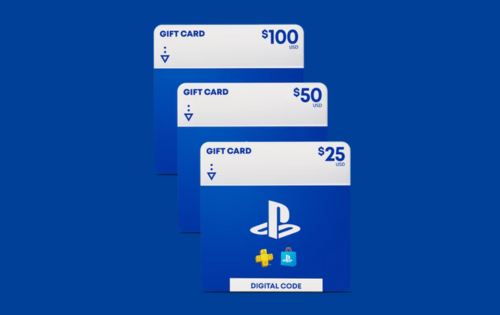
The image above shows how a digital code should arrive: as a clear, printable string from a retailer's fulfillment system. If a seller sends the code in an unusual format, refuses to provide a receipt, or tells you to keep it "offline" to avoid detection, that is a strong sign the code was obtained through unauthorized channels.
The Verdict
Free PSN gift cards are worth your time only when the source is official or independently verifiable; everywhere else, they come with unacceptable risk. Start with Sony promotions and reward apps with real payout histories, and avoid generators completely.
link oneThis link goes to the seller's official page. If you buy through it we may earn a commission at no additional cost to you. Our assessment is written independently.
Frequently Asked Questions
Are free PSN gift cards actually free?
Only when they come from an official promotion, a giveaway, or a reward program — and even then, you usually trade time or attention. A truly free code never requires a payment, a survey, or your password. Anything that asks for money to "unlock" a free card is a purchase, not a gift.
How can I get free PSN gift cards codes safely?
Use official Sony sources, reputable reward apps, and giveaways run by known creators or retailers. Verify the source, never give your PSN password, and keep payout expectations realistic. If an offer promises a large code instantly, it is almost certainly a scam.
Can a PSN code generator really work?
No. PSN codes are generated and tracked by Sony's backend, and each code has a unique redemption limit. An external website cannot create codes without access to that system. Every "generator" you find online is either a phishing tool or a paid-survey funnel.
Why is my PSN code not being accepted?
The most common reasons are a region mismatch, a code that was already redeemed, or a code that was voided because the original purchase was fraudulent. Double-check the code's country against your account's region, then contact the seller. Codes from unofficial sellers rarely come with support.
Do PSN gift cards expire?
PlayStation wallet codes generally do not expire in most regions, but rules can vary by country. The bigger risk is not expiry; it is the code being voided by Sony if the original purchase is later reversed. That is why buying from an unverified seller is risky even for codes that have not expired.
Are reward apps a reliable way to earn PSN cards?
Some are reliable but slow. The ones that actually pay usually have low payout rates and long redemption windows. Read recent user reviews from a source you trust, and never pay an app to "unlock" a reward. If an app asks for your PlayStation login, delete it immediately.
What should I do if a site asks for my PSN password to deliver a code?
Close the tab immediately. A code is redeemed by the recipient, so the sender never needs your password. Sites that ask for it are credential phishing attempts. If you already entered it, change your password and enable two-step verification right away.
What's the difference between a PSN code and a gift card?
A gift card is the physical or digital carrier that holds a code; a PSN code is the string you enter in the PlayStation Store to add credit. They work the same way when you redeem them. Physical cards often have a scratch-off layer that hides the code, while digital codes are delivered by email or on-screen.
Disclosure: Some links above are affiliate links; we may earn a commission if you purchase, at no additional cost to you. This does not affect our editorial assessment, which is based on publicly available product information.