By Daniel R. · Updated 2026-08-20 · 9 min read
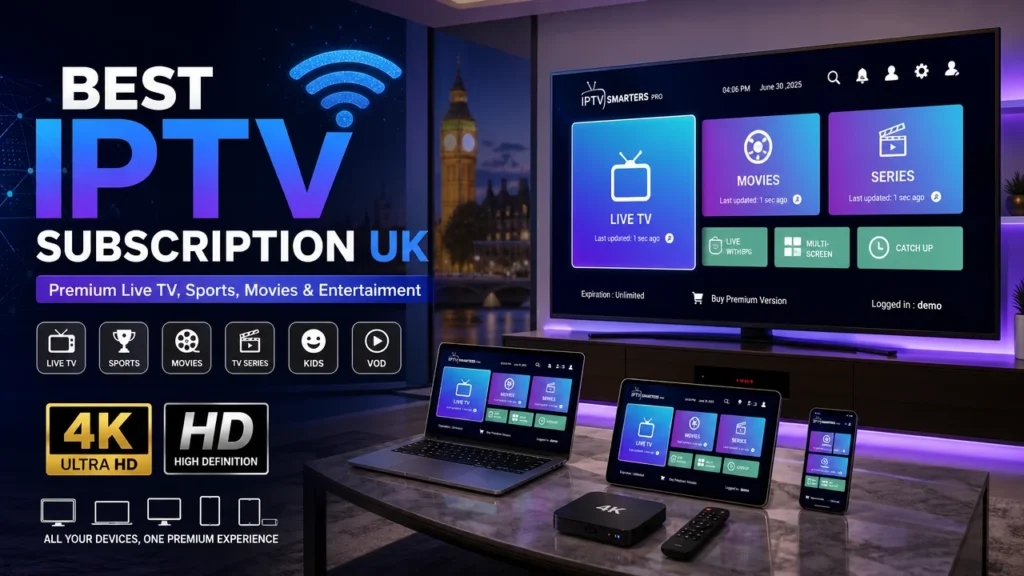
The screen above shows the core promise of IPTV: live television delivered through your internet connection instead of a cable box or satellite dish. When you type “what is iptv tv” into a search bar, you’re likely looking for a straightforward answer before committing money. IPTV stands for Internet Protocol Television. It means your TV signal travels over the same network you use for email, browsing, and streaming apps.
That simple definition hides a complicated market. Some IPTV services are fully licensed and operate like Netflix or Hulu — YouTube TV, Sling, and Hulu + Live TV are all IPTV under the hood. But there is also a sprawling gray market of unverified IPTV subscriptions selling thousands of channels for the price of a sandwich. Buyers often jump in without understanding the differences, then deal with buffering, dead channels, or even legal notices.
This guide walks through the criteria that actually matter before you buy — device compatibility, channel lineup, legal risk, support, and pricing. You’ll learn what to check, what to avoid, and how to test a service before locking in a long-term plan.
Why Many People Regret Their Choice
The most common regret isn’t about the technology — it’s about the purchase decision. IPTV itself works well when the provider is stable and the setup is correct. The problem is that many buyers choose a service based only on price and channel count, then discover the real experience is nothing like the screenshots.
A frequent story: someone pays for a 12-month “premium” subscription at $40, watches flawlessly for two weeks, then the service starts buffering during live sports, half the channels stop loading, and support never responds. The reseller may have shut down, or the upstream source disappeared. Because the payment was made via crypto or a non-refundable processor, the money is gone. This happens with unauthorized IPTV resellers, not the established licensed providers.
Another regret comes from unrealistic expectations. A service advertising “10,000+ channels” may deliver a chaotic, unorganized list where 6,000 are foreign-language streams, duplicates, or test cards. The electronic program guide (EPG) may be missing for most channels. What looked like a great deal on paper becomes a daily frustration.
Criteria That Should Drive Your Decision
Before you compare providers, get clear on the non-negotiables. These five criteria separate services that work long-term from those that only work during the trial period.
1. Device compatibility and ease of setup
The best IPTV service for Firestick isn’t the same as the one you’d pick for an Android smart TV or a Mag box. Check if the provider offers a native app for your device or if you’ll need to sideload an APK. Also confirm whether it supports the IPTV player you prefer — TiviMate, IPTV Smarters, or a proprietary app. A service that works on multiple devices (Fire TV, Android, iOS, Windows, Smart TV) gives you more flexibility if you upgrade later.
2. Channel lineup that matches your needs
An IPTV channels list USA should include the local networks, sports channels, and cable staples you actually watch. Ask for a current channel list before you pay. If the provider can’t give you one or the list is outdated, that’s a red flag. For sports fans, confirm the specific league channels and pay-per-view events are included — and that they actually load during high-traffic times.
3. Streaming quality and anti-freeze infrastructure
Look for providers that use multiple servers, support at least Full HD (1080p), and mention anti-freeze technology or load balancing. Real-world performance still depends on your internet speed — a minimum of 10–15 Mbps for HD and 25 Mbps for 4K is a safe baseline. But even with fast internet, a poorly managed server will stutter. Test during peak evening hours, not just mid-day.
4. EPG and catch-up TV
A proper electronic program guide tells you what’s on now and later. Catch-up TV lets you watch shows from the past 24–72 hours. Without these features, live IPTV feels like a raw stream list. Licensed services almost always include a full EPG. Gray-market services often advertise it but deliver incomplete data.
5. Payment options and refund policy
Reliable services accept standard payment methods (credit card, PayPal) and offer a trial or a short refund window. If the only payment option is cryptocurrency or a shady processor, you have zero recourse if the service disappears. Monthly plans are safer than annual plans when you’re testing a new provider.
What You Need to Know About the Current Market
To understand what is IPTV TV in today’s market, you need to separate three categories: licensed streaming TV services, traditional cable, and third-party IPTV subscriptions. Technically all three use Internet Protocol to deliver content, but the legal and reliability differences are huge.
How does IPTV work exactly? Your provider sends TV signals as IP packets over the internet. Your device — a Firestick, smart TV, or set-top box — decodes those packets and displays them as video. Unlike cable, which uses a dedicated coaxial line, IPTV shares bandwidth with everything else on your home network. That’s why a stable internet connection and a good router matter more than the TV itself.
IPTV vs cable TV is a common comparison. Cable offers predictable quality and bundled pricing but requires contracts, equipment fees, and availability at your address. IPTV is more flexible, often cheaper, and works anywhere with internet. The trade-off is that your experience depends on your ISP, and gray-market IPTV carries additional risks that cable never has.
The legal landscape is where most confusion happens. Licensed providers like YouTube TV, Hulu + Live TV, Sling, Fubo, and DirecTV Stream have agreements with content owners. They are legal IPTV providers. Unlicensed IPTV resellers do not. They offer huge channel lists for $5–$20 per month, but they often disappear, get blocked, or expose users to legal notices. When you ask “where to buy iptv subscription,” the safe answer is either a licensed streaming service or a verified provider that has been tested and reviewed by real users — never a random seller on social media.
Questions to Ask Before Buying
Write these questions down or save them on your phone. Any provider that can’t answer them clearly is not worth your money.
- Is this service legal in my country, and do you have licensing agreements for the channels you offer?
- Do you provide a free trial or a paid 24-hour test so I can check quality during peak hours?
- Which devices are supported — Firestick, Android TV, Apple TV, smart TVs, Mag boxes?
- How many simultaneous connections are allowed on one subscription?
- What is your refund policy if the service stops working within the first week?
- Which payment methods do you accept, and are recurring payments easy to cancel?
- Do you include a full EPG and catch-up TV for the channels I care about?
- Where are your servers located, and what anti-freeze measures do you use?
- What happens if a channel I regularly watch goes down? How quickly is it fixed?
- Can I use a VPN with your service, and do you recommend one?
Warning Signs to Spot
Experience from IPTV review Reddit threads and user forums highlights the same red flags repeatedly. Watch for these before you hand over any payment information.
- Too cheap for the channel count. A $5/month subscription claiming 15,000 channels is almost certainly unauthorized and unstable. Legitimate licensed services cost $40–$80 per month for far fewer channels.
- No trial or only a “paid trial” that still requires full personal details. Honest providers let you test before paying for a full month.
- Only crypto payments or vague processor names. This means no chargebacks and no accountability.
- No contact page, no support email, no live chat. A service that cannot be reached will not help you when channels fail.
- “Lifetime subscription” offers. No IPTV provider can guarantee a lifetime of service. This is a marketing trick to get a larger upfront payment.
- Pressure to buy today with a countdown timer or “only 3 spots left.” Legitimate services don’t use artificial scarcity.
Comparing Your Options: Cable, Licensed IPTV, and IPTV Subscriptions
Use this comparison table to see where each option lands across the criteria that matter most. Note that “IPTV Subscription” refers to third-party providers that often operate in a legal gray area — not the licensed services like YouTube TV or Hulu Live.
✓ Benefits & Pros of IPTV
No long-term contract or equipment rental fees
Watch on Firestick, smart TV, phone, tablet, or PC
Access international channels and niche sports that cable skips
Often cheaper than cable for comparable live TV
✗ Limitations & Cons of IPTV
Depends on internet speed and stability — no internet, no TV
Gray-market providers may disappear without warning
Buffering and channel downtime are more common on cheap plans
Setup may require sideloading apps or configuring a player
RECOMMENDED RESOURCE
what is iptv tv
See current details, seasonal promos, and full tier packages before you commit.
Learn more about what is iptv tv →
How to Set Up IPTV on Smart TV: A Practical Walkthrough
Once you’ve chosen a provider, the setup process is usually quick. Here is the general flow for most smart TVs and Firestick devices. This works whether you’re testing a service or using a licensed app.
- Install the IPTV app. For Firestick, go to the Amazon App Store and download IPTV Smarters or TiviMate (if available). For Android TV, use the Google Play Store. For Samsung or LG smart TVs, you may need to use the built-in browser to download an APK or use a dedicated app if the provider offers one.
- Get your subscription credentials. After purchasing, the provider will send you an M3U URL or Xtream Codes login (username, password, server URL). Keep this private.
- Enter the playlist or login details. Open the IPTV app, choose “Add playlist” or “Login with Xtream Codes,” and paste/enter the information.
- Wait for the channel list to load. This can take a few minutes for large lists. Don’t interrupt the process.
- Test a few channels. Start with local news, then a sports channel, then an HD movie. Check for lip-sync, buffering, and EPG data.
- Configure the EPG if needed. Some apps let you add a separate EPG URL. If yours is missing, ask the provider for the correct address.
Unlock complete high-definition information instantly here.
Explore what is iptv tv Plans →
Recommendation by Budget and Needs
Your best IPTV choice depends on how much risk you’re willing to accept and what channels matter most.
If you want zero legal risk and reliable local channels: choose a licensed service like YouTube TV or Hulu + Live TV. They cost more but include DVR, full EPG, and customer support. This is the safest bet for families who watch network TV daily.
If you want a large international lineup on a budget: test a reputable IPTV subscription. Start with a monthly plan or a trial. Look for a provider that has been in business for at least a year, accepts standard payments, and has active support channels. A service like what is iptv tv often fits this profile, but always run your own trial before paying for more than one month.
If you only watch a few specific sports or channels: consider a niche provider or an add-on. Many official league apps now sell direct subscriptions. A full IPTV bundle may be overkill.
How to Maximize Your Investment
Even the best IPTV service can underperform if your home setup isn’t optimized. These steps will help you get the most from your subscription.
- Use a wired connection or strong Wi-Fi. Ethernet is always more stable for live TV. If you use Wi-Fi, make sure your device is within range of a 5 GHz band.
- Use a VPN. A VPN can prevent ISP throttling and add a layer of privacy, especially when using gray-market IPTV. Choose a VPN with fast servers near your location.
- Upgrade your streaming device. A Firestick 4K Max or an NVIDIA Shield performs much better than a cheap Android box. The extra processing power reduces app crashes and improves channel switching.
- Use a good IPTV player. TiviMate and IPTV Smarters Pro are popular for a reason. They handle large playlists better than most provider-branded apps.
- Test before committing. Always start with a trial or one-month plan. If the service works flawlessly for 30 days, then consider a longer plan for the discount.
- Keep your app and device firmware updated. Updates often fix buffering bugs and add new codec support.
Final Word Before You Subscribe
“What is IPTV TV” is really a question about how you want to watch television. The technology is mature and works beautifully when matched with a reliable provider. The danger is not IPTV itself — it’s rushing into a purchase without checking the basics.
Take the time to test a trial, ask the right questions, and verify the channel lineup you need. If a deal looks too good to be true, it almost always is. Start small, use a VPN, and never prepay for a year until you’re confident the service will still be around next month.
For a current, tested starting point, you can check the details at the link below. But remember: your own trial is the only proof that matters.
Featured Streaming Selection:
See what is iptv tv Pricing →Affiliate Disclosure: Clicking this secure link verified by our network supports our team through standard partnership terms at zero extra cost to your invoice.
Frequently Asked Questions
This article contains affiliate links. Our editorial analysis remains independent.